

Stucco vs. EIFS in Arizona: Which Wall Finish Actually Belongs on Your Building
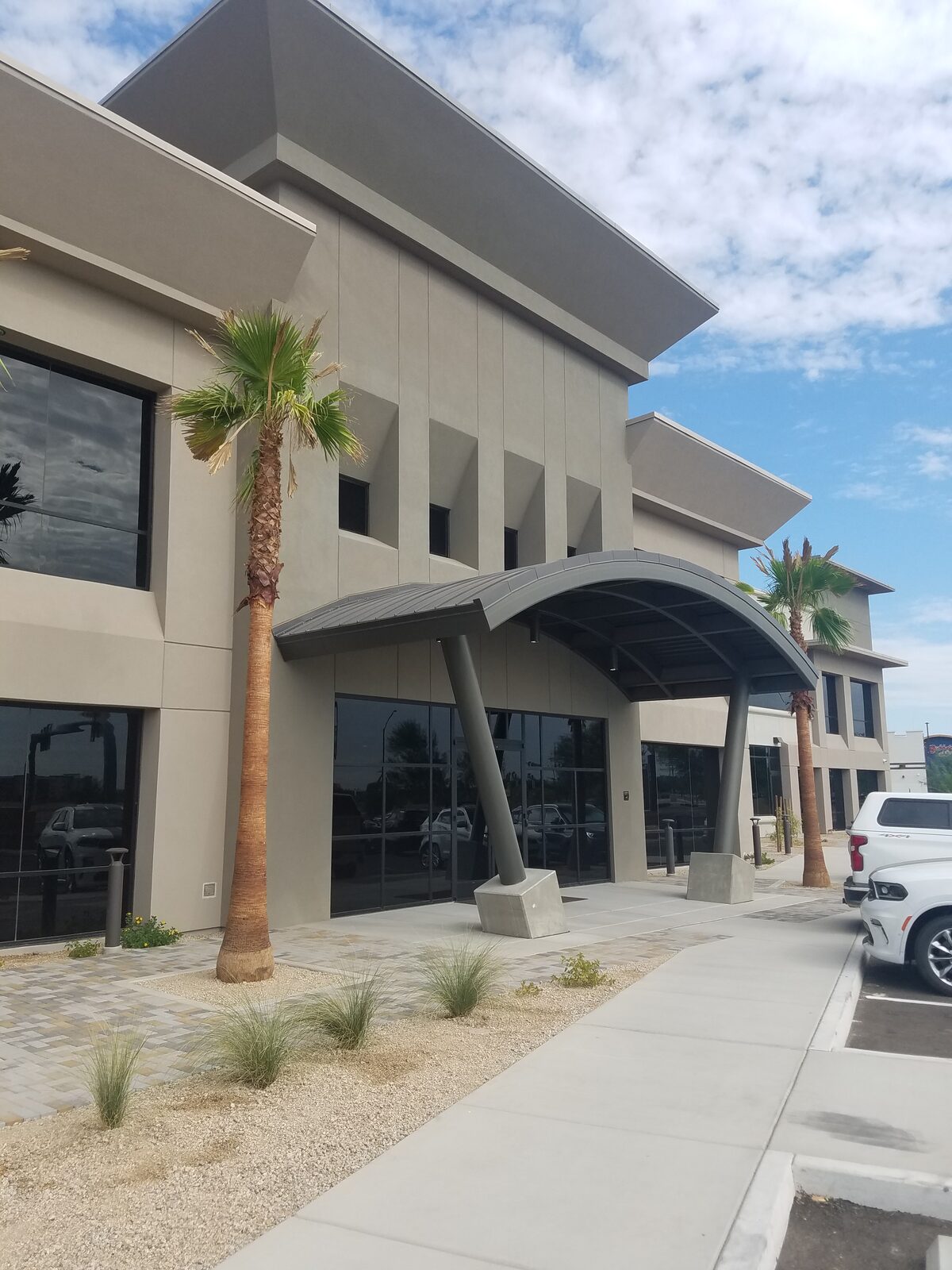
From forty feet away, three-coat stucco and EIFS are the same building. Up close, and over fifteen Arizona summers, they are entirely different products with different failure modes, different maintenance, and different budgets. Choosing between them is one of the more consequential early decisions on a valley project.
What each one actually is
Three-coat stucco is cement plaster: a scratch coat, a brown coat, and a finish coat applied over lath and a weather-resistive barrier. It is a hard, mineral, breathable crust. It is not insulation and was never meant to be.
EIFS — exterior insulation and finish system — is a foam insulation board adhered or mechanically fastened to the sheathing, covered with a thin polymer-modified base coat, reinforcing mesh, and an acrylic finish. The insulation is the point: EIFS puts continuous insulation outboard of the framing, where it interrupts thermal bridging.
The finish textures overlap almost completely, which is exactly why owners assume the two are interchangeable.
Where stucco wins in Arizona
UV and heat tolerance. A cement finish is mineral. It does not soften, outgas, or embrittle under Arizona sun the way polymer coatings can. This is the quiet reason stucco has been the regional default for a century.
Impact resistance. A cement plaster wall shrugs off a shopping cart, a ladder, a delivery dolly, and a kid with a bicycle. EIFS does not — its thin lamina over foam dents and punctures, and every puncture is a water entry point in a system that does not tolerate trapped water.
Repairability. Patching stucco is a routine trade skill available everywhere in the valley. Matching an aged acrylic EIFS finish is specialty work, and the patch usually reads.
Cost. On most Arizona projects, three-coat stucco lands lower per square foot installed, and the trade base is deep enough that you get competitive bids.
Where EIFS earns its place
Continuous insulation. This is the real argument, and it is a good one. Framing members conduct heat around cavity insulation; the more framing, the worse the effective assembly performance. EIFS wraps the structure in an uninterrupted layer. Where a project needs to hit an aggressive envelope target without thickening the wall, EIFS does it in the fewest inches.
Weight and shape. EIFS is light, and foam can be shaped. Cornices, reveals, banding, and sculpted parapets that would be expensive in plaster are inexpensive in EIFS. On a project whose identity depends on modeled facade relief, that flexibility is worth real money.
Crack behavior. Cement plaster cracks — that is a material property, not a defect, and it is managed with control joints rather than eliminated. The flexible EIFS lamina moves instead of cracking.
The detail that decides it
Whichever way you go, the wall lives or dies at the penetrations.
Arizona's monsoon is deceptive. Annual rainfall is small, so people design for a dry climate; then a storm drives rain horizontally at the wall for twenty minutes. Every window head, every scupper, every conduit, every sign anchor is a test.
Modern EIFS should always be specified as a drainable system — with a drainage plane and a path back out — never the face-sealed barrier systems that produced the industry's moisture failures decades ago. If someone proposes a face-sealed assembly on your project, that is the moment to stop.
Stucco is more forgiving of an imperfect detail because it dries in both directions, but it is not waterproof either. It is a reservoir cladding, and it depends entirely on the weather-resistive barrier behind it and on properly lapped flashings.
How we choose
Our default on Arizona commercial work is three-coat stucco, for durability, UV life, and repairability — see how it reads on Goodyear Professional Plaza.
We move to EIFS when the project needs continuous insulation in a thin wall, or when the design depends on modeled relief that plaster cannot produce economically. When we do, we specify a drainable system, we detail every penetration explicitly, and we keep it above splash and impact zones — often with a masonry or plaster base at grade level taking the abuse.
Frequently the right answer is both: EIFS on upper field walls, stucco or masonry where the building gets touched.
This is one piece of a larger envelope strategy — see Arizona construction materials for how the wall decision interacts with glazing and insulation.
Weighing a facade system for a valley project? Send us a note and we will walk the trade-offs against your budget and maintenance plan.