

Arizona Construction Materials: How the Desert Decides What You Build With
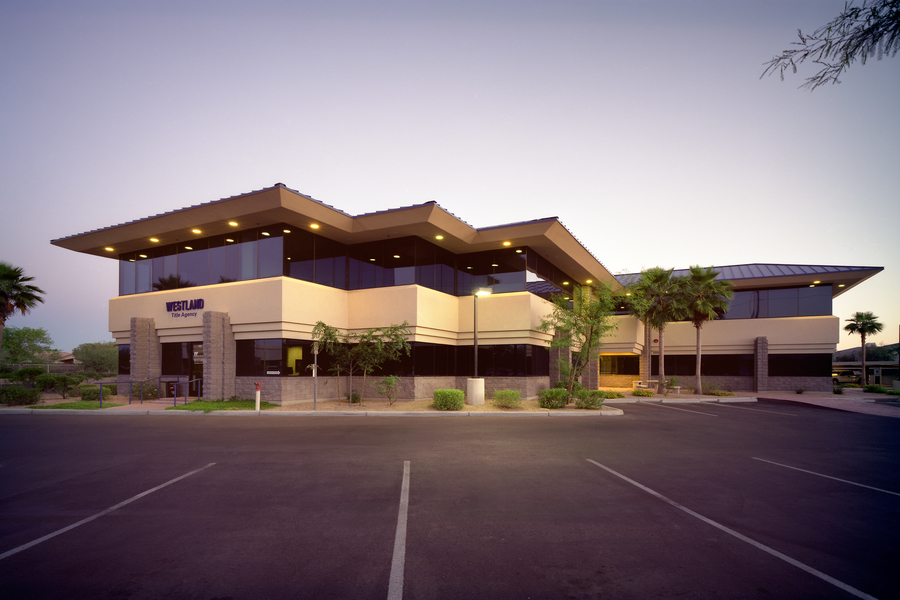
In Arizona, the material list is a climate decision before it is an aesthetic one. The same product that performs for thirty years in Ohio can chalk, crack, delaminate, or cook a building's cooling budget here — not because it was badly made, but because it was specified for a different set of loads.
This is the overview of how we think about construction products across the Phoenix metro, and it links to the deeper article on each system. If you only take one idea from it, take this one: in a cooling-dominated desert climate, the envelope's job is to reject solar gain first and insulate second.
The five loads that actually drive selection
Most of Maricopa County sits in climate zone 2B — hot and dry. That single classification explains most of what follows, but five specific stresses do the real damage:
- Extreme summer heat. Sustained 110°F+ air temperature, with roof and wall surface temperatures far above it. Materials expand, sealants move, and anything with a low softening point is on borrowed time.
- Ultraviolet exposure. Arizona gets punishing year-round UV. It is the single most underestimated load on coatings, sealants, gaskets, and any exposed polymer.
- A large daily temperature swing. Desert nights drop hard. That swing is brutal for joints and adhesives, but it is exactly what makes thermal mass work here when it fails elsewhere.
- Monsoon. July through September brings wind-driven rain in short, violent bursts. Annual rainfall is low, which misleads people — the intensity is what tests flashing, parapets, and drainage.
- Dust and soil. Blowing dust loads filters and fouls seals. Underneath, expansive and collapsible soils in parts of the valley govern the foundation long before you pick a finish.
Walls: mass, or a rain screen that respects the sun
Two wall approaches dominate Arizona commercial and residential work, and they solve the heat problem in opposite ways.
Concrete masonry uses thermal mass. A CMU wall absorbs heat through the afternoon and releases it after sundown, flattening the peak cooling load rather than resisting it. That strategy only pays off where nights cool substantially — which is precisely the Arizona pattern. It is also inherently termite-proof and fire-resistant, which matters more here than most owners expect. See CMU block construction in Arizona.
Cement plaster — stucco — over framing is the region's default finish, and for good reason: it is inexpensive, breathable, repairable, and it tolerates UV better than nearly any coating you could put in its place. Its insulated cousin, EIFS, buys you continuous insulation at the cost of impact resistance and a much less forgiving detail at every penetration. The comparison is worth doing deliberately: stucco vs. EIFS on Arizona buildings.
Roofs: the largest solar collector you own
A low-slope commercial roof in Phoenix is the hottest surface on the property and the biggest single lever on the cooling bill. Reflectivity, not R-value alone, is what moves the number — a bright, high-reflectance surface can run dramatically cooler than a dark one under the same sun.
That is why spray polyurethane foam with a reflective coating, single-ply membranes in white, and concrete tile over a ventilated batten space all keep showing up on Arizona projects. Each carries a different maintenance obligation, and the coating recoat cycle is the detail owners most often miss: Arizona commercial roofing systems.
Glazing: the one place people specify backwards
If you change one habit from a colder-climate project, change this. In a heating climate you optimize U-factor. In Arizona you optimize solar heat gain coefficient — how much of the sun's energy the glass lets through. Glass is the weakest link in the envelope, and west-facing glass in July is where a building's cooling load is won or lost.
Orientation, shading, and SHGC together will beat any amount of extra wall insulation: low-E glazing and SHGC in Arizona.
Insulation: continuous beats thick
Adding depth to a cavity has diminishing returns once thermal bridging through the framing dominates. Continuous insulation outboard of the structure, plus a genuinely sealed and properly located duct system, does more for comfort and operating cost than a bigger number in the batt schedule: insulation assemblies for Arizona buildings.
Shade: the cheapest cooling you can buy
Shade is a construction product. A ramada, a deep overhang, a perforated metal screen, or a shade sail over a patio reduces load before it ever reaches the envelope — and in Arizona it is what makes exterior space usable enough to count as square footage. It is also frequently the highest-return line item on a restaurant or retail project: shade structures and ramadas.
How we actually make the call
On our projects the sequence is consistent. We start with orientation and shading, because those are free. We pick the wall system next, since it sets the structure and the detailing vocabulary for everything after it. Glazing and its shading get specified together, never separately. The roof assembly follows the structure. Finishes and sealants come last, and they get chosen for UV life rather than for the sample board.
Every one of those choices gets tested against the same question: what does this product look like in year fifteen, in this sun?
These material choices sit inside a larger commercial picture — how each segment of the Arizona construction market actually works, from ground-up new construction to tenant improvement and adaptive reuse.
You can see how these decisions resolve on real buildings across the portfolio — from masonry industrial shells like Man-D-Tec to shaded restaurant patios like SunBar.
Planning a project in the valley and want the material strategy set before drawings start? Send us a note — Paul walks the site and the product list with you personally.