

Low-E Glazing in Arizona: Why SHGC Matters More Than U-Factor
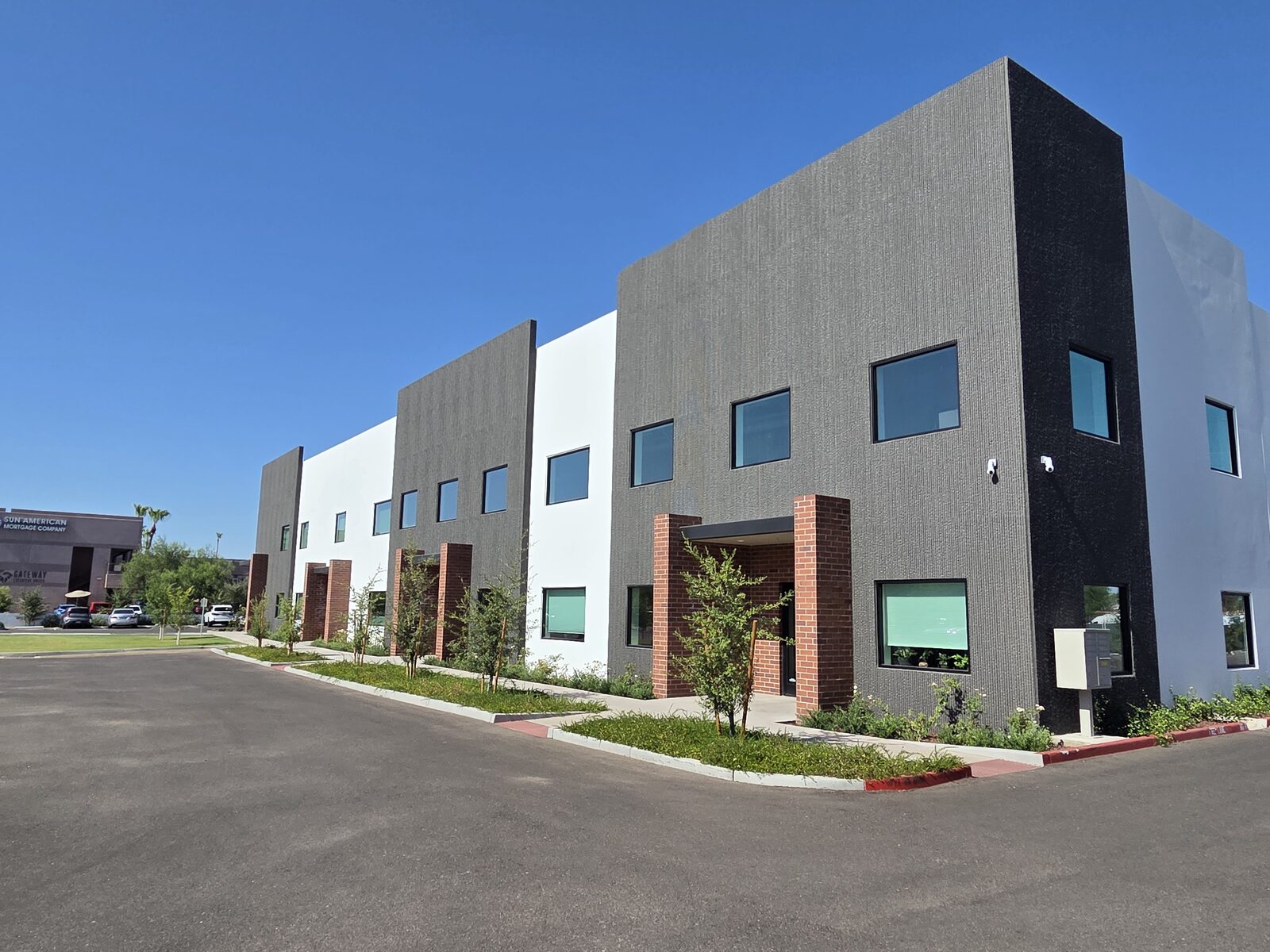
If you carry one habit over from a cold-climate project, make sure it is not this one. In a heating climate you optimize U-factor. In Arizona you optimize solar heat gain coefficient. Get that backwards and you can install expensive, code-compliant windows that still cook the building.
The two numbers, plainly
U-factor measures how readily heat conducts through the assembly. Lower is better. It governs when there is a large temperature difference across the glass — a Minnesota January.
SHGC measures the fraction of solar energy that gets through. It runs 0 to 1; lower means less solar heat admitted. It governs whenever the sun is on the glass, which in Phoenix is most of the year.
A Phoenix office building spends the overwhelming majority of its energy on cooling. The sun striking west glass at 5pm in July is not a conduction problem — that energy comes straight through as radiation, and U-factor barely touches it. SHGC is the number that stops it.
What low-E coatings actually do
A low-emissivity coating is a microscopically thin metallic layer on the glass that is transparent to visible light but reflects infrared. The useful part is that coating type and placement are tunable.
For hot climates, the coating goes on the outboard pane's inner surface (surface 2 in a double-glazed unit), where it rejects solar infrared before it enters the cavity. Cold-climate units place it differently, to keep interior heat in. Same product family, opposite job. Ordering a cold-climate build-up for an Arizona building is a real and surprisingly common error.
Spectrally selective coatings are what you want here: high visible light transmittance with low SHGC. They let you keep daylight and views while rejecting heat — far better than the old approach of simply darkening or mirroring the glass, which kills daylight, forces the lights on, and gives you a building that looks like 1985.
Orientation changes the answer
Uniform glass on all four elevations is a missed opportunity.
- West is the hardest condition in Arizona. Low afternoon sun cuts under overhangs and arrives when the outdoor temperature is already at its peak and the building is already saturated. Lowest SHGC, and shade it.
- East is similar but the morning load lands on a cooler building, so it costs less.
- South is the easiest to control architecturally. High summer sun angles mean a properly sized horizontal overhang shades south glass in summer almost entirely. Geometry beats coatings here — and it never degrades.
- North gets minimal direct sun. This is where you can afford larger openings and better daylight without paying for it in cooling.
Shading beats coatings, and it is cheaper
The best-performing glass on the building is glass the sun never reaches. An overhang, a fin, a recessed opening, a screen, or a deep entry does more than any coating upgrade, costs less, and cannot degrade or be value-engineered out of the physics.
Recessing the glazing is one of the oldest desert moves there is, and it still works — see the shaded entries at The Bigelow Building. For larger exterior areas the same logic scales up into shade structures and ramadas.
Specification points we insist on
- Verify the coating surface. Confirm the low-E is on surface 2 for a hot-climate unit. Do not assume the supplier defaulted correctly.
- Thermally broken frames. An aluminum frame without a thermal break conducts heat around whatever the glass is doing, and it condenses.
- Warm-edge spacers. The perimeter is where insulated units fail first, and Arizona's thermal cycling is hard on them.
- Argon fill, with expectations. Argon helps U-factor. It does very little for SHGC, so it is not the lever that matters most here.
- Check visible transmittance too. Chasing the lowest possible SHGC can leave you with dim interiors and the lights burning at noon, which gives the savings straight back.
For how glazing fits the rest of the envelope, see Arizona construction materials.
Specifying glass for a valley project? Send us a note — we will review the orientation-by-orientation package before it goes out to bid.