

Shade Structures and Ramadas: The Cheapest Cooling in Arizona
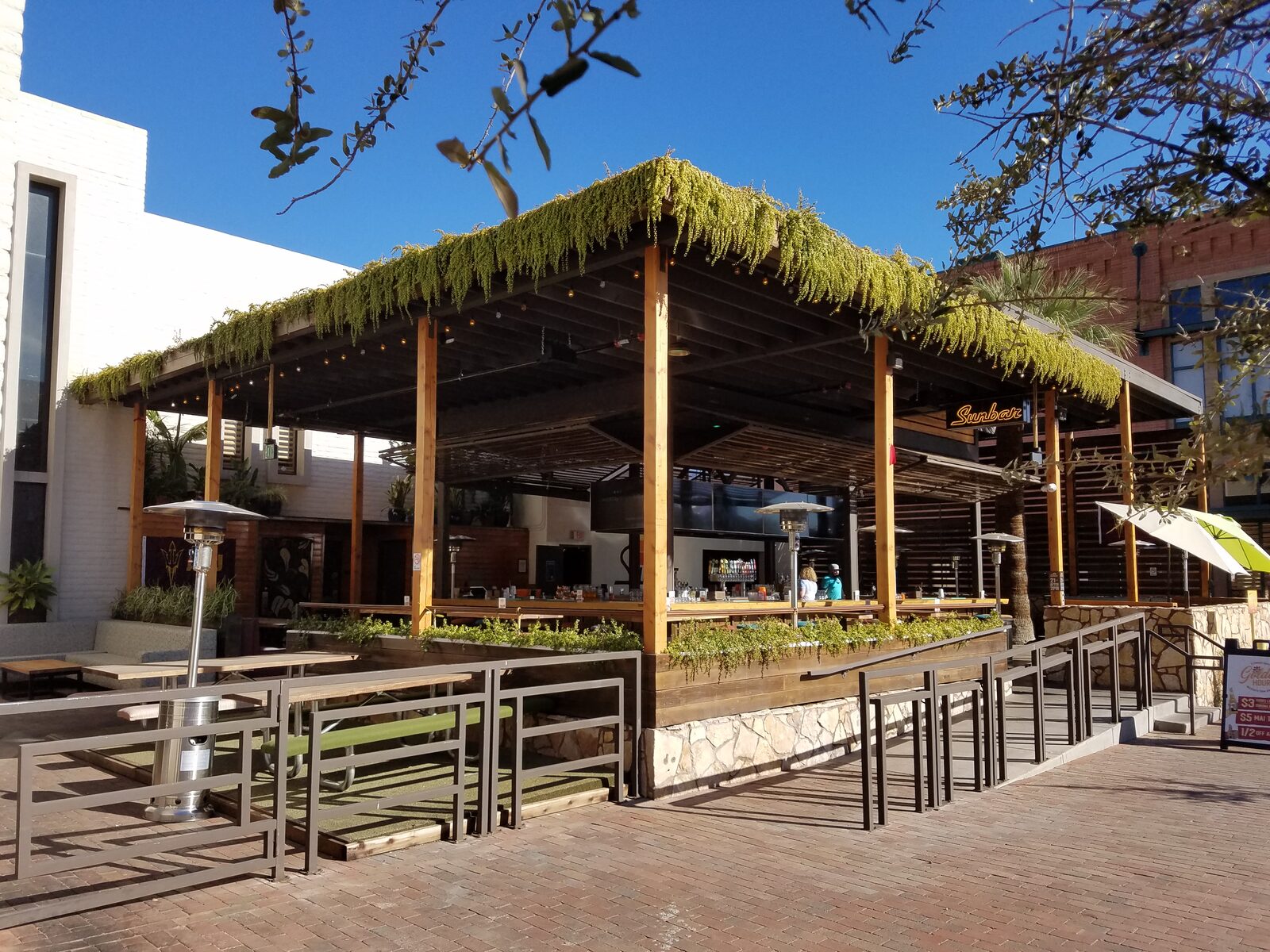
Shade is a construction product, and in Arizona it is usually the highest-return one on the list. It stops solar load before it ever reaches the envelope, and on restaurant, retail, and hospitality projects it converts exterior area that is unusable eight months a year into space that generates revenue.
Owners tend to treat shade as landscape decoration. It is closer to mechanical equipment that never needs power.
Why it beats an envelope upgrade
Every watt of sun intercepted before it lands on glass or wall is a watt the cooling system never has to remove. Blocking radiation outside the building is categorically more efficient than rejecting it at the glass and far more efficient than removing it from the air afterward.
It also works on surfaces no glazing spec can help: shaded paving stays dramatically cooler than paving in full sun, which lowers the reradiated heat against the building and makes the adjacent space tolerable. Shading the condensing units improves their efficiency too — they reject heat into cooler air.
And unlike a coating, geometry does not degrade. A correctly sized overhang performs identically in year thirty.
The forms, and what each is good for
Deep overhangs and recessed openings. The cheapest option, because it is just the building. Sized against summer sun angles, a south overhang shades the glass below it through the cooling season and still lets low winter sun in. Recessing the opening does the same thing in plan. See the shaded arcade at Goodyear Professional Plaza.
Ramadas. The regional archetype: a freestanding roofed structure, open on the sides. Solid roof, full shade, real rain shelter during monsoon, and a structure substantial enough to carry fans, lighting, and misting. The default for patios, plazas, playgrounds, and gathering space.
Pergolas and slatted structures. Partial shade with visible sky and airflow. Slat spacing and orientation determine how much sun gets through and when — a detail worth designing rather than defaulting. The banded light is the point aesthetically, as at SunBar.
Shade sails and tensile fabric. Large spans, low weight, low cost per square foot covered, quick to install. Fabric is consumable in Arizona sun — specify high-quality UV-stabilized material and expect replacement on a cycle, which makes them best where that is acceptable: parking, play areas, temporary or seasonal use.
Perforated metal screens and louvers. Vertical shading for the east and west exposures that overhangs cannot help, since low sun comes in under any horizontal element. Doubles as facade identity.
Trees. Slowest and best. Shade plus evapotranspiration, which actively cools rather than merely blocking. Requires water and years, and the species choice has to be right for the valley — but a mature canopy over a west elevation is unmatched.
Details Arizona punishes you for missing
Wind, not weight, governs. Monsoon microbursts produce severe wind loads, and a shade structure is essentially a sail on posts. Uplift is the controlling case. Footings and connections get engineered — this is the failure people actually see after a storm, and it is always a foundation or connection failure, not a member failure.
Orientation before size. A structure sized without checking sun angles often shades the wrong ground at the wrong hour. West exposure needs vertical elements or deep projection; a horizontal roof alone will not stop 5pm sun.
Fasteners and finishes. Full-sun exposure with a large daily thermal swing works every connection. Stainless or hot-dip galvanized hardware, powder-coated or properly finished steel, and sealants specified for UV rather than for price.
Drainage. A solid-roof ramada is a roof. It collects monsoon rain and has to put it somewhere that is not the middle of the patio or against a building.
Permitting. Freestanding structures over a threshold size typically need a permit and engineering, and they interact with lot coverage and setbacks. Worth confirming early rather than at inspection.
Where it belongs in the sequence
Shade is the first move, before glazing, insulation, or roofing — because it reduces the load those systems have to handle. The full material strategy is in Arizona construction materials.
Adding a patio, ramada, or screen to a valley project? Send us a note — getting the orientation and the wind engineering right at design time costs nothing extra.