

The Arizona Construction Market: What It Actually Takes to Build in the Valley
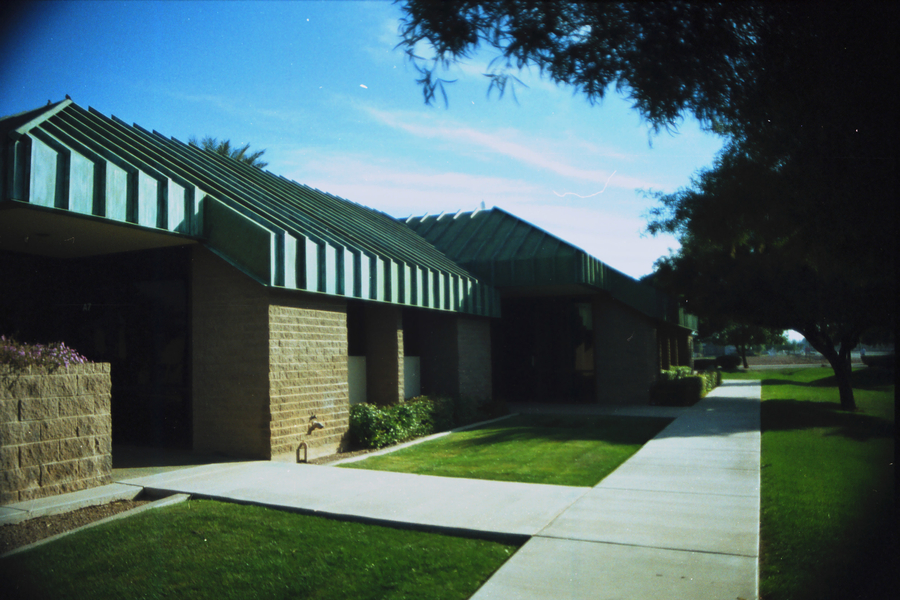
Building in the Valley is a different exercise from building almost anywhere else, and not for the reason most people assume. The climate is the obvious difference. The one that actually governs your schedule and your budget is jurisdictional: Maricopa County is a mosaic of independent municipalities, each with its own zoning ordinance, design review culture, submittal portal, and appetite for what you want to build.
Two identical buildings, one in Scottsdale and one twenty minutes away, are not the same project. This is the overview of how each segment works, and it links to the detailed article on each.
The segments, and what makes each one hard
Ground-up new construction is where the entitlement risk lives. You are buying land against a set of assumptions about what the jurisdiction will let you build, and the gap between "zoned commercial" and "approved for your specific building" is where projects die. Ground-up new construction in Arizona.
Restaurants are the most technically dense small buildings anyone builds. A 3,000-square-foot restaurant carries more regulatory surface area than a 30,000-square-foot warehouse — health department, grease interception, hood and make-up air, liquor licensing, and a patio that has to work in July. Restaurant construction in Arizona.
Retail and shopping centers are merchandising problems expressed in architecture. Visibility, ingress and egress, pad siting, signage rights, and a shell flexible enough for tenants you have not signed yet. Retail and shopping center construction.
Commercial office in this market has bifurcated. Generic space competes badly; buildings that offer shaded arrival, real daylight, efficient floor plates, and covered parking still lease. Commercial office construction.
Medical office is office with a different rulebook — accessibility and egress scrutinised harder, plumbing and power density far higher, and the occupancy classification driving the structure. Medical office construction.
High-end custom residential is the segment where the desert makes the strongest architectural demands: hillside ordinances, view corridors, native plant protection, and a climate that punishes a badly oriented house. High-end custom homes in Arizona.
The three things that cut across every segment
Entitlements decide your schedule. Not construction. The gap between submitting and breaking ground is where projects gain or lose quarters, and it varies enormously by jurisdiction and by how far your proposal sits from what the ordinance already permits. Entitlements and permitting in Arizona.
Cost is driven by decisions made before drawings. Structural system, floor plate, site work, and the mechanical load your envelope creates are largely locked in schematic design. Finish selections, which is where owners focus, move the number far less. What actually drives Arizona construction costs.
Not every project should be new. The Valley has a deep stock of buildings whose bones are good and whose use is obsolete. Tenant improvement and adaptive reuse frequently beat ground-up on both schedule and cost. Tenant improvement and adaptive reuse.
What the desert adds on top
Every segment above inherits the same climate problem: a cooling-dominated building in a hot-dry zone where the sun, not the outdoor air, is the load. The envelope decisions that follow from that — orientation, shading, glass selection, roof reflectivity — are covered in Arizona construction materials.
The mistake to avoid is treating that as a late-stage specification exercise. Orientation and shading are free at schematic design and expensive to retrofit into a set of construction documents.
How Almond ADG works in this market
Paul has practised in this market for over forty years, across every one of the segments above — restaurants, retail centers, office, medical office, industrial, and custom residential.
That range matters more than it sounds. Most of what goes wrong on a project is not a design problem; it is a sequencing problem, a jurisdiction problem, or a decision made in the wrong phase. Having run the same process through six phases on all of these building types is what lets us tell you early which of your assumptions is the expensive one.
Weighing a project in the Valley? Send us a note — the first conversation is usually about whether the site can carry what you have in mind.